Attractiveness is not one thing. And it’s definitely not the same thing for men and women.
This is something I come back to constantly in my London clinic, because it’s one of the most misunderstood principles in aesthetic medicine. The features that make a face look striking, balanced and attractive are genuinely different depending on whether you’re treating a male or female face. Not slightly different. Fundamentally different.
Yet so much of the aesthetic industry still treats both the same way. The same filler volumes, the same placement points, the same treatment philosophy applied universally regardless of who’s sitting in the chair.
That’s where results go wrong.
So here are five evidence-based principles I use every day when maximising facial attractiveness and exactly how they differ between men and women.
1. Facial structure: sharp angles vs soft contours
This is the most foundational difference and getting it wrong is the quickest way to produce a result that looks off.
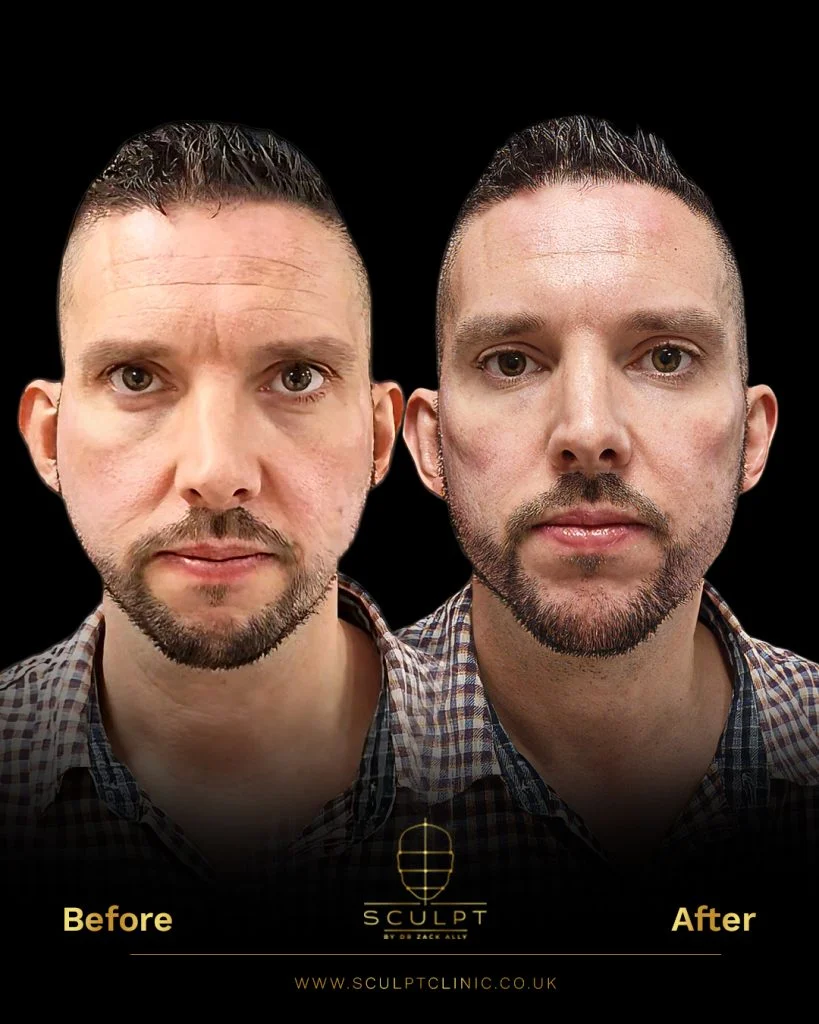
For men, attractiveness is built on structure. Strong jawlines, defined cheekbones with lateral projection, a square or slightly tapered chin. The goal is angularity. When I treat a male face at Sculpt Clinic London, I’m thinking about how to create shadow and definition, how to make the bone structure appear more prominent and how to give the face a sense of solidity and strength. Volume in the wrong place, placed too softly, immediately feminises a male face and erases exactly what makes it attractive.
For women, the same principles apply in reverse. The most attractive female faces tend to have high, softly contoured cheekbones with forward projection rather than lateral width, a tapered oval or heart-shaped lower face and a chin that is refined rather than squared. The goal is curves, softness and elegance rather than hard edges. Too much angularity in a female face makes it read as harsh rather than beautiful.
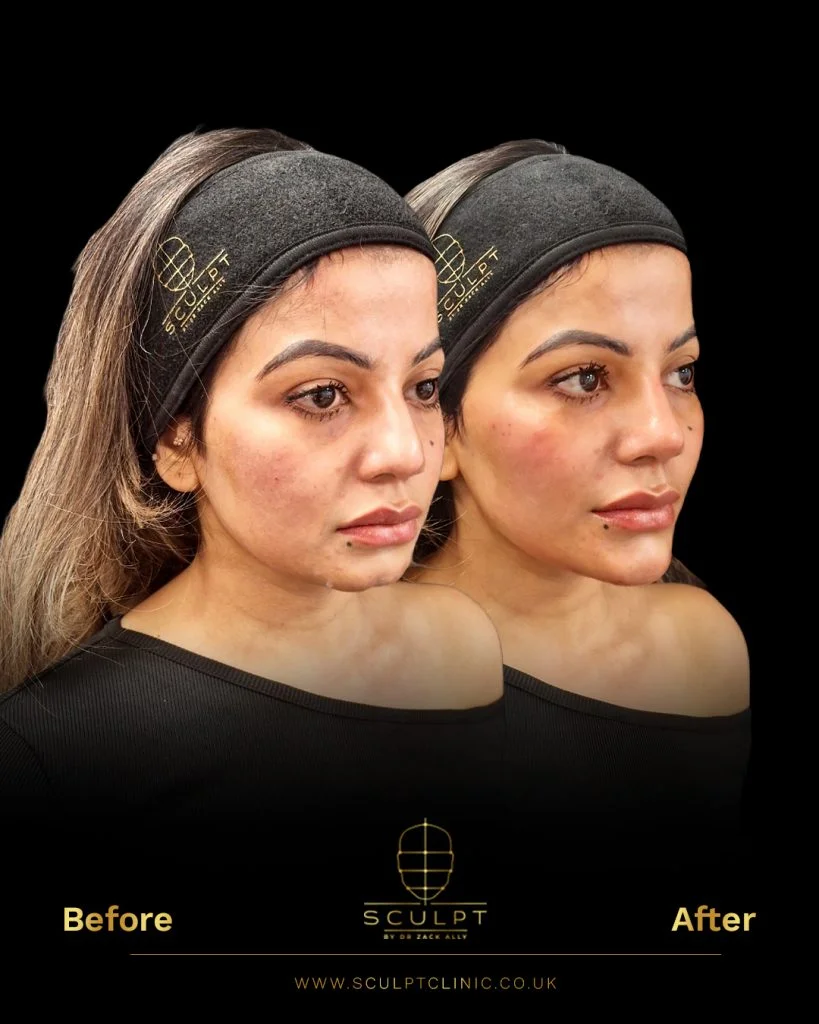
The treatment approach is completely different for each. Same tools, opposite intentions.
2. Facial proportions: the framework everything else sits on
No feature exists in isolation. This is the principle behind all proportion-based aesthetic work and it applies equally to men and women, though the ideal ratios differ.
For both, I use the Golden Ratio (approximately 1:1.618) and the Loomis Method to map the face before any treatment is planned. The vertical thirds (hairline to brows, brows to nose base, nose base to chin) and horizontal fifths are the starting point for understanding where a face sits relative to ideal proportion. Research published in PubMed has found that the most attractive faces consistently show the least deviation from ideal proportional ratios, reinforcing why proportion-led assessment matters so much in clinical practice.
For men, the lower third is particularly important. A strong, well-projected chin anchors the entire face and is one of the highest-impact changes available in non-surgical aesthetics. Without it, even a naturally attractive male face can read as weak or unfinished.
For women, the midface tends to be where proportion has the most impact. Cheekbone height and projection relative to the lower face determines whether a female face reads as youthful and elegant or flat and tired. Restoring or enhancing this relationship is often the single most transformative change available.
I’ve covered the full framework behind facial proportion analysis in detail here: How to Optimise Your Facial Proportions: What No One Actually Tells You.
3. The lips: different rules for men and women
Lip aesthetics is probably the area where the male vs female distinction is most commonly ignored and where the most obvious mistakes are made.
For women, lip attractiveness is about the relationship between the upper and lower lip, the definition of the cupid’s bow, the pout of the body and the way the lips relate to the philtrum and chin. The ideal lower lip is slightly fuller than the upper. Projection matters as much as volume. A well-treated female lip looks defined, hydrated and proportionate, never inflated.
For men, almost everything changes. Male lips are naturally thinner and less defined than female lips and that’s appropriate. The goal when treating a male lip is almost never to add visible volume. It’s to enhance shape very subtly, improve hydration and maintain the masculine character of the lip without feminising it. Over-volumising the male lip is one of the most common and most visible mistakes in aesthetic practice. If someone can tell a man has had his lips done, it’s almost certainly been done wrong.
4. The jawline and chin: where masculinity and femininity diverge most sharply
Of all the structural features, the jawline and chin create the biggest difference in perceived attractiveness between male and female faces, which is why I treat them so differently.
For men, a well-defined jawline is one of the most requested and highest-impact treatments available. I use dermal filler to sharpen the gonial angle (the corner of the jaw), extend and define the jawline along its length and improve chin projection and squareness. The result, when done correctly, looks entirely natural. The face simply looks more defined, more structured, more masculine. You can find out more about how I approach The Male Face as a distinct discipline on the treatment page.
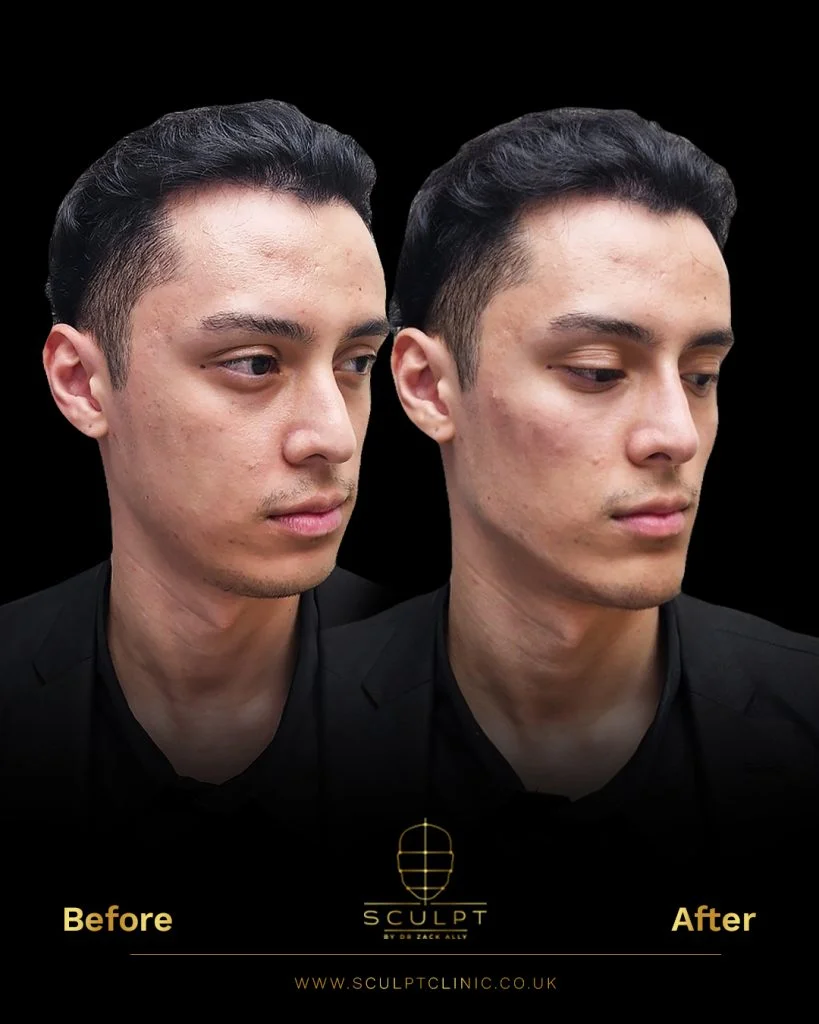
For women, jaw definition still matters, but the approach is entirely different. Rather than squaring and widening, the goal is to create a smooth, tapered transition from the midface to a refined chin. A squared jaw on a female face can masculinise it immediately. The chin itself is ideally slightly pointed or softly rounded rather than square and projection matters more than width. My approach to The Female Face follows the same bespoke assessment framework, with softness and elegance as the guiding principle throughout.
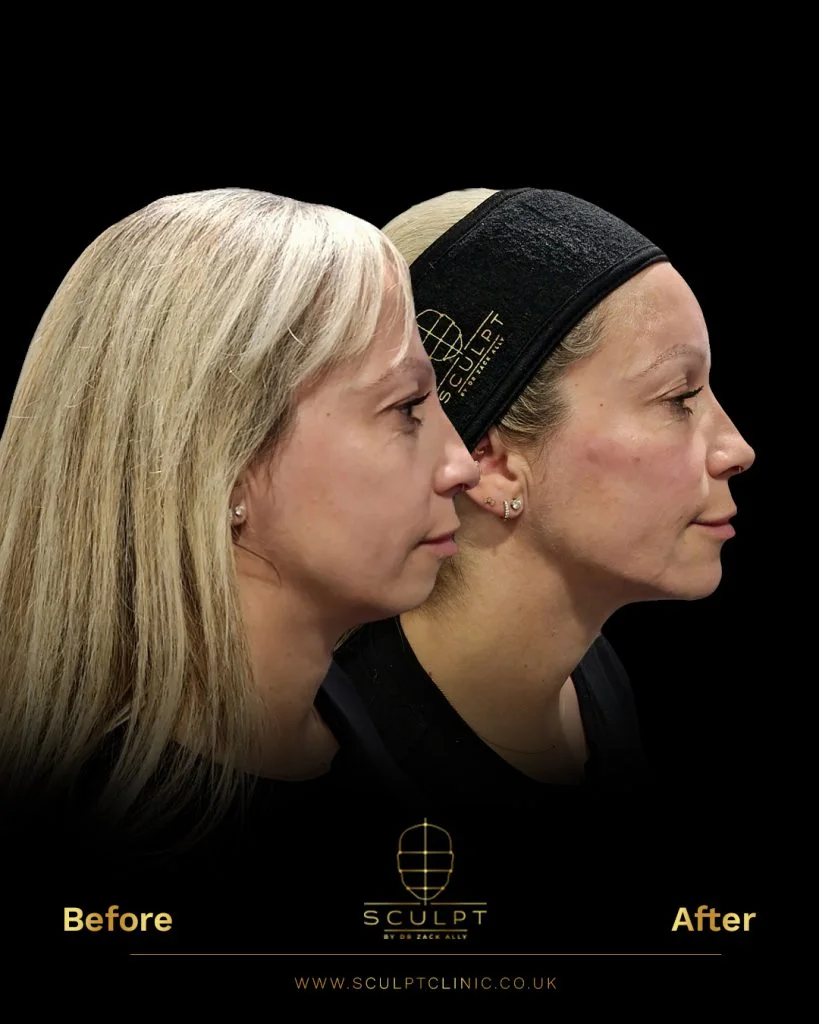
Getting this distinction right is what separates a result that looks natural and specific to the patient from one that looks like a generic aesthetic treatment.
5. The eyes and brows: how they frame everything
The upper face is often underestimated in terms of its impact on overall attractiveness, but the brow position and eye area are critical framing elements for both men and women.
For men, the ideal brow sits at or just below the orbital rim (the brow bone), running in a relatively straight, horizontal line. A brow that arches too high or sits too far above the bone immediately reads as feminine. When treating the upper face in male patients, I’m focused on maintaining or restoring that low, strong brow position. Anti-wrinkle treatment in the forehead of a male patient requires specific dosing and placement to avoid inadvertently lifting the brow and changing the character of the face.
For women, the brow should arch naturally, peaking above the outer third of the eye and lifting gently toward the tail. A well-positioned female brow creates an open, alert and elegant upper face. Brow position drops naturally with age and restoring it, whether through anti-wrinkle treatment, filler or a combination, is one of the most rejuvenating changes available without surgery.
The eyes themselves benefit from addressing hollowing under the eye (the tear trough), which affects both men and women but presents slightly differently. In men, significant under-eye hollowing tends to read as fatigue and ageing. In women, it creates a drawn, unwell appearance. The treatment approach is similar but the volumes and placement points differ.
Putting it all together: why a bespoke assessment matters
Reading through these five principles, you’ll notice a pattern. The tools are often the same. The intention is completely different.
This is why a bespoke facial assessment is not a luxury in aesthetic medicine. It’s the starting point for any result worth having. Without a clear understanding of what your face specifically needs, based on your structure, your proportions, your gender and your goals, treatment is just guesswork with expensive products.
At Sculpt Clinic, you work with me directly. We treat The Male Face and The Female Face as genuinely distinct disciplines. Every consultation begins with a full structural assessment before any treatment is discussed. The result is a plan that is built around your face, not applied to it.
Whether you’re looking to enhance masculine definition, restore feminine elegance or simply understand what your face actually needs, the consultation is where it starts.
Book a facial attractiveness consultation with Dr Zack Ally in London
Frequently Asked Questions
Attractiveness is primarily about proportion and balance. A face where each feature is in harmony with the others and where the structural relationships between features align with natural proportional ratios, consistently reads as more attractive. This applies regardless of individual features, ethnicity or age.
The core difference is structure vs softness. Attractive male faces tend to be angular, defined and structured. Attractive female faces tend to be softly contoured, with elegant curves and a tapered lower face. The same treatments, applied with the same philosophy to both, produce results that look wrong on at least one of them.
Yes, significantly. Precisely placed dermal filler can improve structural definition, restore proportion, enhance jawline and chin projection and balance the overall face. Anti-wrinkle treatment can refine the upper face and improve brow position. When planned against a proper proportional framework, the results are natural, structural and lasting.
In most cases, jawline and chin definition. A well-projected, defined lower face anchors the entire structure of a male face and creates the appearance of strength and balance. The impact relative to the treatment involved is significant.
Midface proportion, particularly cheekbone height and projection, tends to have the greatest overall impact on female facial attractiveness. Restoring or enhancing the relationship between the midface and the lower face creates a lift and elegance that affects how the entire face reads.
Dr Zack Ally at Sculpt Clinic, Raynes Park, London SW20 specialises in bespoke facial assessment and treatment for both male and female patients. Every consultation includes a full structural and proportional analysis before any treatment is planned. You can book directly through the Sculpt Clinic website.
When done correctly by a specialist, it should be invisible. The goal is never to make someone look like they’ve had treatment. It’s to make them look like the best, most balanced version of themselves. If a result is obvious, something has gone wrong in the planning.
Ready to Have an Honest Conversation?
Book a Consultation with Dr Zack Ally
At Sculpt Clinic, consultations begin with listening, not selling. If you have a specific concern you would like to explore with a doctor who will be straight with you, we would like to hear from you. Book your consultation at our London clinic
Book Your Consultation